
Creature Control provides humane groundhog removal and burrow control across Central and Southeast Michigan, including Ann Arbor, Jackson, Lansing, Brighton, and the surrounding counties. No contracts. Call 1-800-441-1519 for fast service.
Groundhog Removal & Burrow Control in Southeast & Mid-Michigan
A groundhog under your shed, porch, or foundation is not just a nuisance, it is a slow structural problem. Their burrows undermine footings, let water seep in against foundation blocks, and open the door to crawl spaces and other wildlife. Creature Control removes groundhogs humanely, seals the entry points, and repairs the damage so the problem stays gone. No contracts, a personal technician on every job, and fast service across your area.
Groundhogs turn up every spring and fall across Southeast and Mid Michigan, from the older neighborhoods and heavy clay soils around Ann Arbor, Brighton, and Jackson to the lawns and farm edges near Lansing and Owosso. Wherever there is a garden, an open yard, or a deck to dig beneath, they will move in and start tunneling. Our local technicians know how these burrows behave in Michigan ground and how quickly they turn into foundation, drainage, and landscaping damage, so we inspect the full property, trace the tunnels, remove the groundhog, and seal the burrows the right way. If you are searching for groundhog removal near you, call Creature Control at 1-800-441-1519 for fast, humane service with no contracts.
What Damage Can Groundhogs Do?
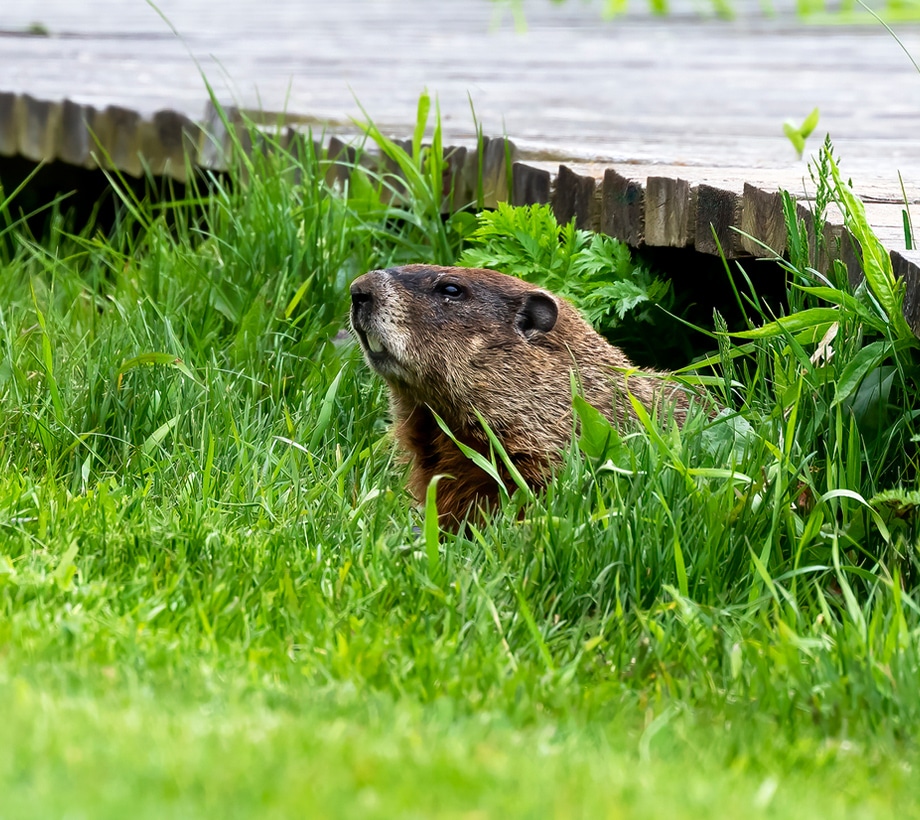
Groundhogs, also called woodchucks, cause far more damage than their size suggests, and most of it happens underground before you notice it. A single burrow against your foundation can let water seep in and wear away the foundation blocks over time, and the tunnels can eventually open into a crawl space. Their tunnel systems can run up to 100 feet, with the main tunnel sitting 3 to 6 feet deep, so the damage is usually well underway by the time a hole or a collapse gives it away.
Beyond foundations, groundhogs undermine patios, decks, sheds, and concrete slabs, damage underground utilities and irrigation, erode soil, create tripping hazards, and can attract other wildlife. We cover the full picture in our guide on groundhogs and foundation damage, which is worth reading if you have spotted a burrow near your home. The takeaway is simple: act at the first hole, because the longer a groundhog digs, the more it costs to fix.
Signs You Have a Groundhog
The clearest sign of a groundhog is a burrow opening about the size of a melon with a large mound of fresh dirt beside it, usually dug under a structure like a shed, deck, porch, or foundation. You may also see chewed or flattened garden plants, worn paths across the lawn, or soil pushed up along a foundation line. If you are seeing holes near the house, an inspection is the fastest way to confirm it is a groundhog and map how far the tunnels reach.
Our Groundhog Removal Process
We handle groundhogs in three steps, and we stay on the job from the first inspection through the repairs.



Why Central and Southeast Michigan Homeowners Choose Creature Control
We are fully licensed and insured, we use humane methods, and we work with no contracts. More importantly, we do not just trap the animal and leave. We seal the burrows, repair the damage, and make sure the problem is actually solved, which is the part that protects your foundation and your wallet in the long run. Your technician stays with your property from start to finish.
Groundhog Removal Across Southeast & Mid Michigan
FAQs About Groundhog Removal
The reliable way to get rid of a groundhog under a structure is professional trapping followed by sealing the burrow, because groundhogs avoid ordinary traps and will reopen a hole that is only filled with soil. Creature Control inspects the burrow, removes the animal with specialized traps, then fills and seals the entry points with gravel, sand, concrete, or clay and repairs the damage so another groundhog cannot move in.
Yes. A groundhog burrow against a foundation can let water seep in and wear away the foundation blocks over time, and the tunnels can eventually reach a crawl space. The damage builds slowly and is often hidden until a burrow collapses, which is why it is best to act at the first sign of a hole. Our guide on groundhogs and foundation damage explains how this happens.
Groundhog tunnel systems can extend up to 100 feet, with the main tunnel usually 3 to 6 feet deep. That depth and length are why a surface hole is only part of the problem and why a full inspection matters before removal.
The best way to fill a groundhog hole is with gravel, sand, concrete, or clay rather than loose soil or mulch, which a groundhog can easily dig back out. Filling the hole should come after the animal is removed, because sealing an active burrow can trap a groundhog inside or simply push it to dig a new entrance.
Call a professional as soon as you see a burrow near your home, a deck, a shed, or a foundation. The earlier a groundhog is removed, the less digging and structural damage it can do, and a professional can trace the full tunnel system, remove the animal humanely, and seal the burrows so the problem does not come back. Reach Creature Control at 1-800-441-1519.