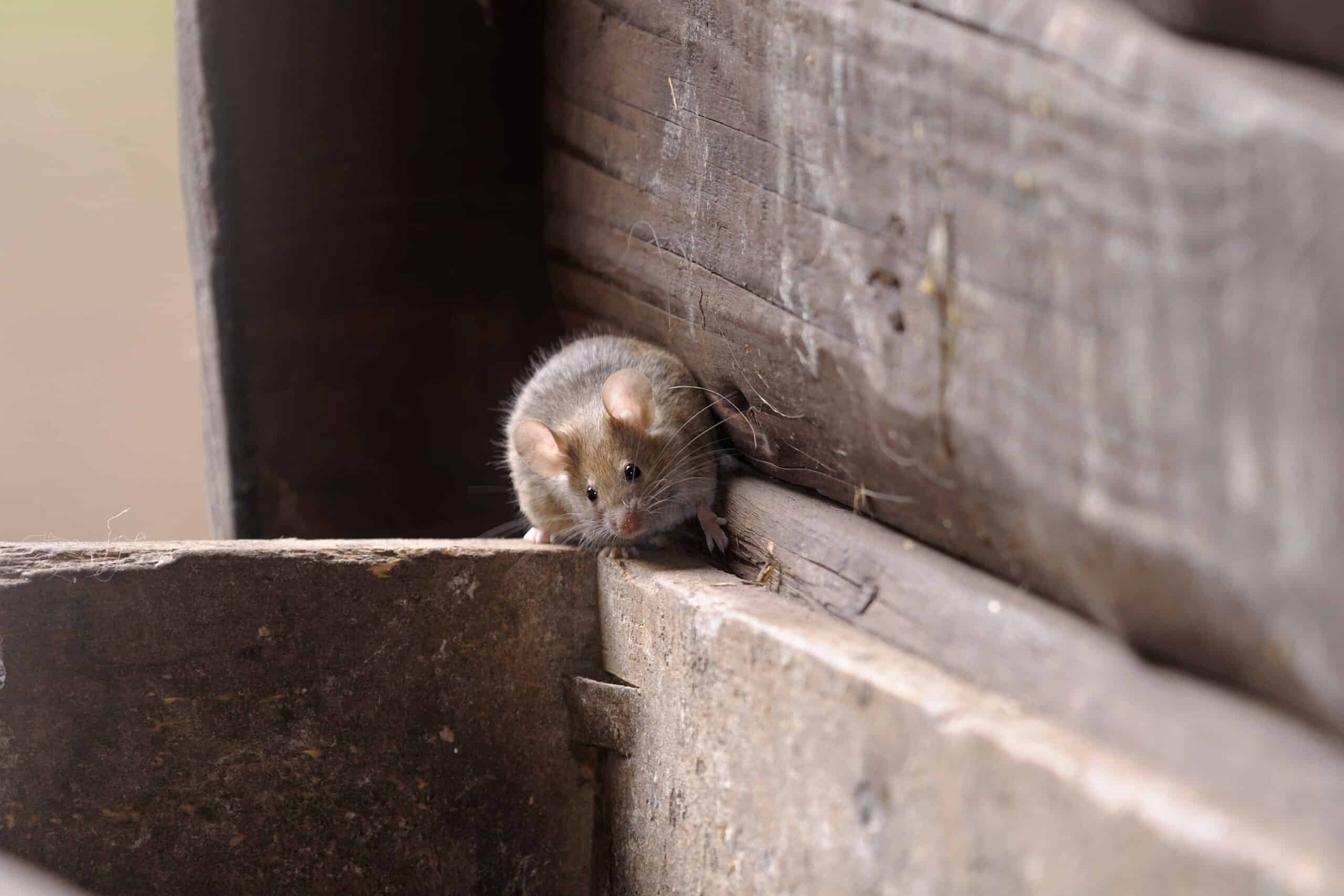
Rodents don’t always make their presence known—at least not right away. By the time you…
Why Do Mice Keep Coming Back Even After I Trap Them?
By Chris, Wildlife Technician at Creature Control
If you’ve ever set traps, caught a few mice, and then heard scratching again a week later — you’re not alone. By the time I get to an inspection, most homeowners have already attempted various solutions. They use snap traps, glue traps, bleach, high-pitched noise gadgets, bright lights, and even radios.
Sometimes those DIY fixes help a little, but the mice keep coming back. That’s because trapping alone doesn’t solve the real problem. Here’s why your traps aren’t working — and what actually gets rid of mice for good.
1. Traps Only Solve Part of a Recurring Mouse Problem
When you spot a mouse or find droppings, that’s usually not the beginning of an infestation — it’s a sign it’s already well-established. A single female mouse can have up to eight litters a year, so by the time you see one, there are probably more nesting in your walls, attic, or basement.
That’s why recurring mouse problems happen even after you think you’ve trapped them all. Traps may catch a few individuals, but they don’t remove the rest of the colony living out of sight.
2. Mice Follow the Same Pheromone Trails Back Inside
Even after you’ve caught every visible mouse, the scent trails they leave behind remain. These pheromone trails act like highways for new mice outside, signaling that your home is a safe, food-rich place to settle in.
Even if you remove the current mice, new ones can follow the same paths back through the same openings. This can make it seem like your traps aren’t working, but the real problem is that new mice are coming in.
3. Tiny Gaps Let Them Sneak Back In
Mice don’t need open doors or windows. They can squeeze through gaps smaller than a dime, often around foundations, rooflines, and utility pipes.
I’ve seen them climb siding, brick, and even shrubs or downspouts to reach new entry points. A full inspection is important for solving a recurring mouse problem. This includes checking the roof, attic vents, and attached garage.
4. Spray Foam and Quick Fixes Don’t Stop Mice
One of the biggest issues I see during DIY attempts is spray foam. It might make you feel like you’ve sealed a hole, but to a mouse, that’s chewable insulation.
Professionals use chew-proof materials — galvanized hardware cloth, copper mesh, metal flashing, and sealants backed with rodent-resistant barriers. Those are what actually keep mice from coming back.
5. Long-Term Prevention Is the Only Real Solution
Even with every gap sealed, no home can stay mouse-proof forever. Houses settle, new cracks form, and mice are expert gnawers. That’s why we always recommend a long-term rodent prevention plan with bait stations around the exterior of the home that we monitor and replenish quarterly.
This keeps the population controlled outside so it never becomes an indoor problem again.
My Advice as a Technician
If your traps aren’t working and mice keep returning, don’t feel discouraged. It’s not about trapping harder; it’s about treating smarter. Here’s what truly works:
- Inspect thoroughly. Find every area of mouse activity.
- Treat and exclude. Eliminate the existing population and secure all openings with materials resistant to chewing.
- Maintain prevention. Use exterior monitoring and bait stations for long-term control.
That’s the process we follow at Creature Control, and it’s what keeps homes mouse-free all year long.
If you’re tired of dealing with a persistent mouse issue, contact us — we’ll locate their entry points and ensure they don’t return.
1-800-441-1519 | CreatureControl.com,
Serving Jackson, Livingston, Washtenaw, Ingham, and Oakland Counties.
Contact Us Today!
"*" indicates required fields
Call Us
For Immediate Help
Call 1-800-441-1519 to talk to one of our local wildlife experts. Or, fax us at (734) 551-9795.
Business Hours
Monday – Friday: 8 a.m. to 6 p.m
Saturday: 8 a.m. to 2 p.m.
Sunday: 8 a.m. to 12 p.m.
For After-Hours Help
Call (877) 623-9190. For after-hours emergencies, please be aware that additional charges will apply. We can also be reached by fax at (734) 551-9795.
Related Posts