

House Mice Removal Company in Farmington Hills, MI
Evicting Unwanted Roommates Across the Town
Farmington Hills homes range from established neighborhoods with mature trees to newer developments with landscaped yards and nearby green spaces. While that setting is great for homeowners, it can also make it easy for mice to find their way indoors through small gaps around foundations, vents, siding, and utility lines.
Once inside, mice seek out warm, quiet areas like basements, attics, wall voids, and storage spaces. They chew wiring and materials, contaminate surfaces with droppings, and reproduce quickly if the mouse infestation isn’t addressed early.
Creature Control provides professional rodent removal services throughout the area. Our licensed technicians find where mice are getting in, stop the access points, remove active mice, and clean up droppings and contamination. We work with homeowners, landlords, and local businesses to restore comfort and keep mice from coming back.

Top Signs of a Mouse Infestation in Farmington Hills
Mice tend to stay hidden once they get indoors, which is why infestations often go unnoticed at first. In Farmington Hills homes and commercial buildings, recognizing the signs early can help limit damage, contamination, and disruption before the problem spreads.
Why this matters: Mice reproduce year-round, and a small mouse problem can escalate quickly if left untreated. Early warning signs often mean mice are already established inside the structure. Addressing the issue promptly helps prevent further damage, health concerns, and ongoing mouse activity.
If you are noticing any of these warning signs, it may be time to contact a professional for mice removal in Farmington Hills.
How Mice End Up Indoors & What You Can Do
Mice look for three things: easy food, accessible water, and a quiet place to hide. In Farmington Hills homes, everyday issues like unsealed pantry items, crumbs along baseboards, pet food left out overnight, and small plumbing drips can make a house far more inviting. Once mice find a reliable food source, they’ll keep coming back, raising the risk of contamination and property damage.
Ways to help prevent a mouse infestation:
- Store pantry items and dry goods in airtight containers to limit access in kitchens, pantries, garages, and basements.
- Seal gaps, cracks, and utility openings around siding, foundations, garage doors, and pipe penetrations—common entry points in many Farmington Hills neighborhoods.
- Clean up crumbs, spills, grease, and clutter so mice have fewer food sources and fewer places to hide.
- Reduce nesting opportunities by keeping attics, basements, closets, and storage areas clean, dry, and organized.
- Watch for early signs like droppings, gnaw marks, scratching sounds, or shredded paper before a small issue turns into a bigger one.
- Act fast at the first sign of activity so a professional rodent removal or pest control service can stop the problem before it spreads.
Why this matters: Mice reproduce quickly, and a minor issue can turn into a full infestation faster than most homeowners expect. If you’re noticing signs of mouse activity in or around your Farmington Hills property, bringing in a local pest control professional early is the most effective way to prevent ongoing damage and avoid repeat problems.
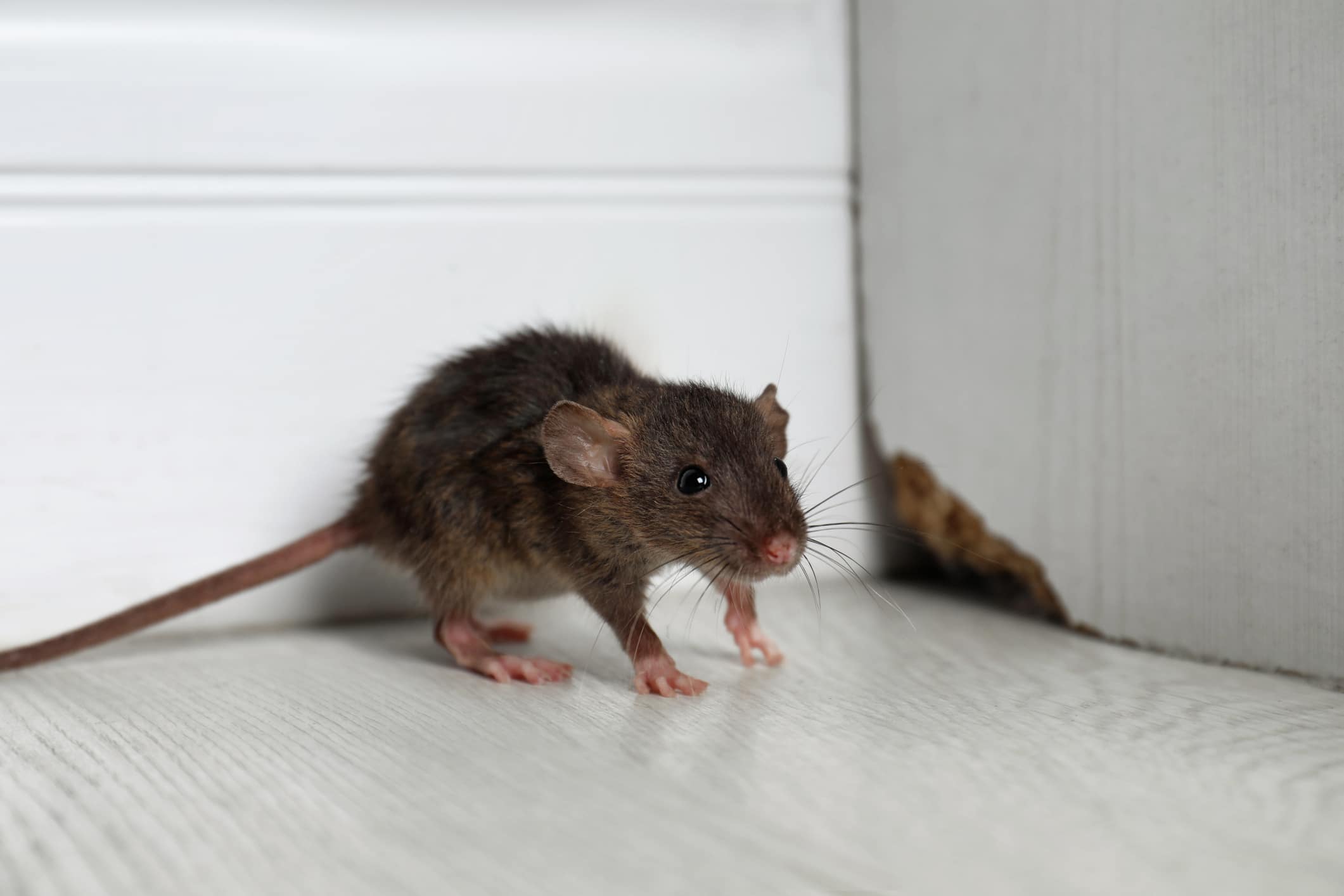
Why You Want to Get Rid of Mice in Farmington Hills
If mice are active in your home or building, the real issue is not just seeing a mouse. It’s what comes with the activity you do not see. Mice move through kitchens, storage areas, and utility spaces, leaving contamination behind as they search for food and nesting spots. They also chew as they travel, which is where the bigger risks start to show up.
Mouse activity can result in:
- Health & Sanitation Concerns: Droppings and urine can collect inside cabinets, drawers, pantries, and storage areas. Even light activity can create sanitation issues that require detailed cleanup.
- Sleep Disruption & Ongoing Disturbance: Scratching and movement inside walls or ceilings, especially at night, are common once mice establish nesting areas out of sight.
- Property Damage & Electrical Hazards: Mice chew wiring, plastic components, and building materials. This can lead to electrical problems, damaged insulation, and preventable repair costs.
- Food Contamination & Waste: Boxed and bagged foods are easily torn open. If access remains, mice often return to the same food source repeatedly.
- Expansion Into Additional Areas: Mice rarely stay in one location. They move along edges, pipes, and wall voids, spreading into nearby rooms and other levels of the structure.
- Hidden Exterior Access Points: In Farmington Hills, infestations often begin outside. Small gaps around doors, vents, utility lines, and foundation openings can allow mice inside if not properly sealed.
Why This Matters: Waiting usually makes the job harder. The earlier mice are removed and entry points are addressed, the easier it is to stop the activity and prevent them from returning.
Why Rodent Control Still Matters
When mice get inside, they do more than startle you in the kitchen. They turn hidden areas of a home or business into high-traffic runways. As mice and rats move, they leave droppings and urine behind, track contamination through storage and food areas, and create conditions that can affect sanitation and indoor air quality. Even a small amount of activity can become a larger concern when it happens in walls, attics, utility rooms, and other spaces you do not see every day.
Rodents have also long been tied to illness because of what they carry and what they leave behind. Mouse droppings, urine, saliva, and contaminated surfaces can contribute to health risks, and parasites associated with rodents can add another layer of concern. A property can look perfectly clean and still have these problems once mice are active indoors.
The best time to respond is early. Quick removal and proper exclusion reduce contamination, limit damage, and make it much less likely that the issue returns.
Farmington Hills Rodent Control FAQs
Smaller than most people think. A house mouse can squeeze through an opening about the size of a dime. If its head fits, the rest of the body usually follows. Their flexible skeletons and soft bodies let them flatten and compress in ways that feel almost impossible.
In Farmington Hills homes, these tiny openings are everywhere. Small gaps around utility lines, worn door sweeps, cracks in foundations, loose siding, and even corners of garage doors can be enough. Many of these entry points are easy to overlook because they do not look ‘big enough’ to matter.
That’s why mouse problems often start without warning. The opening that lets a mouse in is usually the same one homeowners never noticed in the first place.
Rodent season in Farmington Hills usually starts in the fall. As temperatures drop, mice stop living comfortably outdoors and begin searching for warm, protected places to nest. Homes and buildings offer everything they want: heat, shelter, and easy access to food.
That’s why many Farmington Hills residents first notice mice when the weather changes. Scratching in the walls, droppings in storage areas, or activity in garages often shows up as soon as cooler nights set in. Winter tends to be the busiest time for rodent calls because once mice are inside, they do not leave on their own.
That said, rodents do not disappear when spring arrives. If mice settle into wall voids, attics, or utility spaces, they can remain active year-round. Fall is when they move in, but the problem can last much longer if it is not addressed.
In many cases, yes. Mice are rarely solo travelers. If you spot one mouse, it often means others are nearby, using the same entry points and hidden pathways. What you see is usually only a small part of what is happening behind the scenes.
Mice stay close to walls, travel at night, and spend most of their time out of sight. A single mouse spotted in a kitchen, garage, or basement can indicate nesting activity in walls, attics, or storage areas. By the time one appears in the open, the space already feels familiar and safe to them.
Because mice reproduce quickly, a minor issue can expand faster than most homeowners expect. Catching the problem early makes removal simpler and helps prevent ongoing activity.
They can be. Rodents do not just ‘pass through’ a home. They leave droppings, urine, and bacteria behind as they move through kitchens, pantries, storage areas, and pet-feeding zones. For kids, the risk is higher because they are closer to floors and tend to touch everything, then touch their faces.
Pets have their own set of issues. Dogs and cats may try to chase or catch rodents, which can lead to bites or exposure to contamination. Pet food bowls and bags are also common targets, which means rodents often spend time in the exact areas pets visit daily.
Another concern is DIY control methods. Some poisons and improper bait placement can create secondary risks for pets and children. If rodent activity is happening in a Farmington Hills home, a professional approach helps eliminate the rodents while keeping the solution safer and more controlled.
Yes, and they are very good at it. Walls and ceilings are some of the safest places a mouse can live. These spaces are warm, hidden, and full of pathways that let mice travel throughout a home without being seen.
In Farmington Hills homes, mice often enter through basements, garages, or attic spaces and then move straight into wall voids. From there, they can access multiple rooms, different floors, and even neighboring units in multi-unit buildings. They build nests using insulation, paper, and other soft materials they find along the way.
This is also why mice are often heard before they are seen. Scratching, tapping, or quick scurrying sounds at night usually mean mice are active behind walls or above ceilings, not out in the open.
Contact Farmington Hill’s Trusted Rodent Control Experts
Rodents on your property can create real problems fast. They contaminate surfaces, chew wiring, and damage insulation and stored belongings. Left alone, the mess spreads, and the repairs add up.
Our licensed technicians provide professional rodent control designed for Farmington Hills properties. We start with a detailed inspection to pinpoint activity, nesting areas, and entry routes. Then we remove active rodents, seal off access points, and recommend practical steps to reduce attractants. When needed, we also address droppings and contaminated areas so your space feels clean and safe again.
For reliable rodent control, contact our team today.